In the Media · 23 July 2026
Beyond Generation: Petrodex's Integrated Energy Model Powering Southern Africa
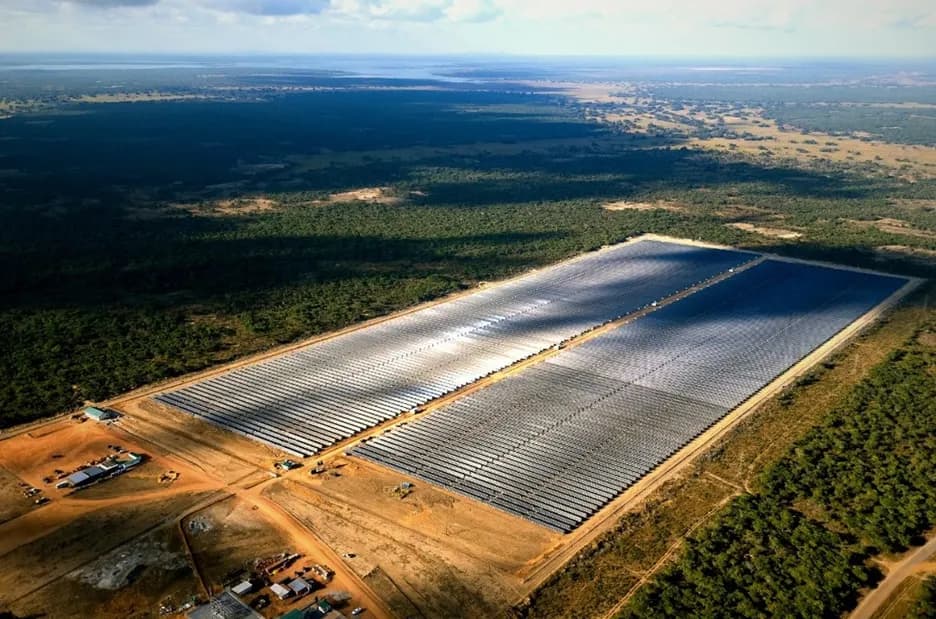
The region's energy gap will not be closed by generation alone. It calls for a more integrated approach, one that moves electrons across borders, builds the lines that carry them, and generates new supply where it counts.
Across the Copperbelt and Haut-Katanga, the binding constraint on growth is no longer the ore in the ground. It is the electricity needed to extract and process it. Global demand for copper and cobalt is climbing, yet the operations positioned to meet it routinely find their output capped by an unreliable power supply.
The roots of this are structural. In Zambia, hydropower makes up over 80 percent of installed capacity, leaving the system exposed to drought. During the 2024–2026 dry spell, water levels at Kariba fell so far that national generation was cut by close to a third, and at its worst load-shedding stretched beyond twenty hours a day. The Southern African Power Pool was carrying a capacity deficit of around 4,200 MW by late 2025. In the DRC, the mining grid in the south is estimated to fall short by around 1,000 MW.
State utilities carry heavy debt and have long sold power below the cost of supplying it, and transmission lines take years to build. Even where bulk power exists in the system, it frequently cannot be offtaken by factories or mines, because the distribution network in between is congested, ageing or simply absent.
The region's governments have responded by opening the door to private partners. Zambia's Electricity (Open Access) Regulations, enacted in 2024, began dismantling the single-buyer model. The Ministry of Energy cut the approval time for solar projects from more than six months to forty-eight hours, and the government set a target of adding 1,000 MW of solar to the grid.
The energy gap facing a mine or an industrial plant is not one problem but four: not enough generation, not enough transmission, a last-mile distribution network that cannot deliver reliably, and cross-border supply that swings with the rains. Closing the gap means working across all four layers at once.
As one of the most active traders in the region, Petrodex moves around 230 MW daily across Mozambique, Zambia, Zimbabwe and the DRC. It draws on a mix of solar and hydro to keep supply flowing to industrial clients even when any single source falls short.
Trading alone does not solve the last-mile problem. Through its Zambian subsidiary, Zampower, Petrodex designs, builds and operates dedicated distribution lines, or reinforces existing ones, that run power straight to a client's site. To date this solution has been implemented with more than twenty-five industrial and mining clients, with more in construction.
The third layer is generation. Under a Memorandum of Understanding with ZESCO to develop 400 MWac of solar capacity, Petrodex energised the first 25 MWp phase of its Mailo Solar plant in Serenje in 2025. Phases 2 and 3 are to follow, for a total of 108 MWp planned by end of 2026. First power flowed less than a year after the agreement was signed, in a market where many projects stall at the financing stage.
None of this substitutes for the work of governments and state utilities; it complements it. As copper demand accelerates, the partnership between reforming governments and private players willing to work across the whole chain is, increasingly, what will determine whether the lights stay on.
Adapted from a sponsored article first published in Copperbelt Katanga Mining (CKM) eMagazine, July–August 2026 edition (Vol. 36, Issue 04), pages 22–23. Original article: https://copperbeltkatangamining.com/beyond-generation-petrodexs-integrated-energy-model-powering-southern-africa/